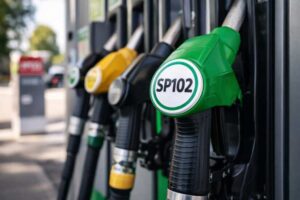
SP102: High-performance fuel, what you need to know

SP102: everything you need to know about this high-performance fuel
THE SP102: High-performance fuel This is a very high octane gasoline designed for high-performance and modified engines, primarily for track use. It offers more stable combustion and allows for more power, but is not suitable for all vehicles or all uses.
Very popular in the competitive scene, the SP102 High-performance fuel is increasingly intriguing to car enthusiasts looking to optimize their engine’s performance. But between myths, paddock legends, and regulatory constraints, it’s difficult to know if it’s truly useful, cost-effective, and, above all, compatible with a standard production vehicle. Understanding what distinguishes high-performance fuel from regular SP95 or SP98 is essential before making the switch, as a poor choice can lead to costly engine damage or voiding the manufacturer’s warranty. Here’s a complete overview of the advantages, limitations, risks, and real-world uses of SP102 to help you decide if this fuel is right for your car.
SP102: Definition and characteristics of a high-performance fuel
To fully understand what the SP102: High-performance fuelFirst, we need to review some basic concepts: the octane rating, the design of modern engines, and the difference between standard road fuel and racing fuel. The goal of SP102 is not simply to “use more expensive gasoline,” but to offer a more stable product, more resistant to knocking, and better suited to extreme thermal and mechanical stresses.
Octane rating 102: what it really changes
The key element of SP102 fuel, it’s his octane rating of 102higher than SP95 (95 RON) and SP98 (98 RON). The octane rating measures the fuel’s resistance to pre-ignition, also known as “knocking” or “detonation.” Knocking occurs when the air/fuel mixture ignites uncontrollably before the spark plug fires, creating violent shocks in the combustion chamber that are harmful to the engine.
The higher the octane rating, the more the fuel can withstand:
- a strong compression (high compression ratio in the cylinder);
- a ignition advance more aggressive (earlier ignition);
- a operating temperature higher;
- a significant overeating (turbo, supercharger) without immediate risk of knocking.
In practical terms, an engine designed or reprogrammed to exploit this octane level will be able to achieve:
- a higher power (more horses);
- A higher engine torque, especially at medium and high speeds;
- a better combustion stability, therefore increased reliability in extreme conditions, particularly in track use.
Conversely, using SP102 in an engine not designed for that fuel generally provides neither a power increase nor a reduction in fuel consumption. Engine electronics will not spontaneously modify parameters to exploit the full potential of SP102, unless they have been specifically designed to do so.
Composition and specific properties of SP102
THE SP102: High-performance fuel It is also distinguished by its formulation. It is generally a highly refined fuel, sometimes of the “racing” type, with:
- a aromatic content specific, optimized for combustion under severe conditions;
- a thermal and chemical stability improved, useful during prolonged heavy loads;
- A Rigorous control of impurities (sulfur, undesirable compounds);
- of the specific additives for injector cleanliness and valve protection according to the formulations.
Some SP102 fuels are advertised as “ethanol-free” or with a very low ethanol content, which can be an advantage:
- for the old vehicles whose materials (seals, hoses) are sensitive to ethanol;
- for the engines that remain immobilized for a long timeethanol attracts moisture and promotes corrosion;
- for one stability over time superior (the fuel degrades less quickly).
However, the absence or low content of ethanol also means a slightly different energy density, which may require fine-tuning the most sophisticated engine maps. Clearly, this is about optimization, not simply substituting for… SP98 from the local station.
SP102, SP98, E10, E85: Knowing the difference
Compare the SP102 Compared to conventional fuels, its positioning is clear:
- SP95-E10 95 RON, up to 10% ethanol, standard fuel for the vast majority of modern cars. Oriented towards the general public, reasonably priced, but more susceptible to moisture and corrosion in some older engines.
- SP98 98 RON, often recommended for high-performance or turbocharged engines. Better knock resistance than SP95, often the ideal balance for dynamic road use.
- E85 E85 is a fuel rich in ethanol (up to 85%), with a high theoretical octane rating but lower calorific value. It requires specific adaptation (conversion kit or reprogramming) and remains very different from a SP102: High-performance fuel in terms of formulation.
- SP102 : 102 RON, premium formulation, limited distribution (specialized stations, paddocks, racing suppliers). Primarily intended for engines under very high load, on closed roads or race tracks.

In summary, the SP102 is not the “new SP98” but a niche product, designed for very specific needs, often related to competition or advanced engine preparation.
Advantages of SP102: performance, reliability and engine cleanliness
THE SP102: High-performance fuel It only makes sense if its advantages are understood within the correct context: that of heavily stressed engines, calibrated to take advantage of it. Under these conditions, it can provide a real benefit, not only in terms of pure power, but also in terms of longevity and consistent operation.
Power and torque gains under optimized conditions
On an engine designed or reprogrammed for a SP102 fuelThe gains can be significant. An octane rating of 102 allows for an increase in:
- THE effective compression ratio ;
- there boost pressure (turbo/supercharger);
- L’ignition advance in areas where rattling previously limited adjustment.
On a 300 to 400 horsepower turbo engine, it is not uncommon to see a gain with mapping adapted to SP102:
- of 10 to 30 horsepower additional;
- and of 20 to 50 Nm of torque, often at mid-range, where the engine works the most on the track.
These figures vary depending on:
- the engine architecture (naturally aspirated, turbocharged, direct or indirect injection);
- the level of preparation (exhaust, intake, intercooler…);
- the leeway already available for mapping on SP98.
A crucial point: without adapting the engine management system, the switch from SP98 to SP102: High-performance fuel This doesn’t guarantee any significant gains. Modern ECUs use knock sensors to protect the engine, but they won’t magically transform a stock engine into a race engine. The potential is there, but it needs to be unlocked through dedicated calibration.
Increased reliability under heavy load and in circuit use
The other major advantage of SP102 concerns the reliability in extreme conditionsOn the track, an engine spends a large part of its time at high RPM, under heavy load, with high oil and coolant temperatures. In these circumstances, SP102 provides:
- a significant reduction in the risk of knocking, especially in the middle of summer or during long sessions;
- a more regular combustion, which limits abnormal mechanical stresses on pistons, connecting rods and valves;
- a operating stability from one session to the next, the quality of the fuel is better controlled than in some large retail stations.
For a sports car owner who spends a lot of time on the track, this factor is sometimes more important than the power increase itself. Less knocking means:
- less than risk of puncturing a piston ;
- less than deterioration of segments in the long term;
- less extreme stress on the connecting rod bearings.
On engines already close to their design limits (some very high-performance turbo models), resorting to SP102: High-performance fuel can therefore be seen as a form of mechanical insurance, especially when they are reprogrammed.
Clean combustion and engine maintenance
Depending on the wording, the SP102 fuel can also contribute to a better internal cleanliness of the engine. Several factors work in its favor:
- A better control of deposits on the injectors, thanks to specific detergent additives;
- a more complete combustionreducing carbon residues in the combustion chamber;
- a sulfur content and impurities often lower than in some entry-level fuels.
Even though SP102 is not a “miracle product”, its regular use in a heavily stressed engine:
- limits thesegment fouling and piston heads;
- reduces certain phenomena of low-speed pre-ignition related to hot deposits;
- may contribute indirectly to the idle stability and hot start.
It should be noted, however, that on a vehicle used primarily in the city or on the highway at a steady speed, these advantages will remain largely theoretical. This brings us back to the central question: the benefit of… SP102: High-performance fuel This is especially noticeable when the engine is really being used.
Limitations, risks and legal framework of the use of SP102
The downside is that the SP102 It is neither universal nor without constraints. Its use requires understanding its limitations, both mechanical and regulatory. Before systematically filling your tank with this fuel, it is essential to be aware of these points to consider.
Mechanical incompatibilities and lack of benefit on unsuitable engines
On a modern, unprogrammed production engine, the use of SP102: High-performance fuel It will generally not cause immediate damage. But it also won’t guarantee significant gains. In some cases, it can even lead to counterproductive behavior:
- cartography planned for SP95-E10 or SP98, unable to utilize a higher octane rating;
- conservative engine management strategies, limiting ignition advance even in the absence of knocking;
- adaptation by the sensors which remains in too narrow a range to exploit the 102 RON.
On some older engines or those designed for a different type of fuel (plain unleaded, premium gasoline with additives, etc.), the use of SP102 can also:
- slightly modify the combustion temperature and the balance between wealth and progress;
- demand a ignition setting specific (on mechanical ignitions);
- require a closer monitoring spark plugs and the fuel system.
This is therefore not a universal “plug and play” product. The idea that a higher octane rating is always better is false if the engine and its management system are not designed to take full advantage of it. On a small naturally aspirated engine designed for 95 RON unleaded, the extra cost of 102 RON unleaded is simply not justified.
Potential impacts on manufacturer’s warranty and homologation
Another often overlooked point: the manufacturer warranty and homologation. Most manufacturers specify this in black and white:
- THE fuel type approved (SP95-E10, SP98, sometimes E85 via a certified kit);
- L’minimum octane rating required ;
- THE banned fuels (aviation fuels, racing fuels not road-legal, homemade mixtures, etc.).
Insofar as the SP102: High-performance fuel is not included in the technical specifications of most production vehicles; a manufacturer could theoretically:
- refuse a covered under warranty in case of engine failure if the fuel used is deemed non-compliant;
- challenge theroad approval if the fuel results in emissions or engine behavior different from the original data;
- demand a technical expertise in case of a dispute, lengthening repair times.
In practice, the cases of warranty refusal solely related to SP102 While rare, the theoretical risk exists, especially when this fuel is accompanied by a reprogramming Undeclared engine. From a legal point of view, this reprogramming, combined with a fuel not originally intended for it, may call into question the conformity of the vehicle to its factory homologation.
Cost, availability and logistical constraints
THE SP102: High-performance fuel is significantly more expensive than conventional road fuel. The following are generally observed:
- A price per liter significantly higher than SP98, sometimes close to or more than double;
- a limited availability : specialist stations, some premium networks, points of sale on the circuit;
- of the storage constraints if you buy in jerrycans or drums (safety, dry place, ventilation).
For an occasional track user, the extra cost may remain acceptable, limited to a few fill-ups per year. For regular or daily use, the bill quickly adds up. The cost/benefit ratio then needs to be considered:
- slight gains in power and engine safety vs. significantly increased fuel budget;
- Potential savings from engine damage vs. investment in a more sensible SP98 preparation.
Finally, supply is not always straightforward. On some distribution channels, the SP102 is only available at specific times or by order. Transporting large quantities of fuel yourself involves safety rules and sometimes regulatory limitations, especially on public roads.
When and for whom is the SP102 really worthwhile?
The central question remains: who actually benefits from using SP102: High-performance fuel The answer depends on the type of vehicle, its level of preparation, and its actual use. The goal is to avoid unnecessary expenses for those who will not derive any tangible benefit.
Production cars, sports cars and modified vehicles
Several categories of users can be distinguished:
- Mass-produced cars (compact cars, family cars, small turbocharged or naturally aspirated engines): for these vehicles, the SP102 It offers virtually no advantage. SP95-E10 or SP98 are more than sufficient for normal road use. Any potential power gains would be less than the manufacturer’s tolerances, and therefore imperceptible.
- Production sports cars (GTI, sports coupes, premium sports cars): on these engines, often optimized for SP98, the SP102: High-performance fuel can play a role in intensive use (track, mountains, high temperatures), especially if they are remapped. Without remapping, we’re talking more about a safety margin than significant performance gains.
- Prepared vehicles (larger turbo, increased compression ratio, etc.): this is the SP102’s main target. With a specific cartographyThese engines can fully utilize 102 octane fuel, gaining power, torque, and reliability. We’re talking about serious modifications here, often used in competition or in intensive track days.
An anecdote perfectly illustrates this difference: during a track day, a tuner observed that the same turbocharged sports compact car developed around 360 hp on a remapped SP98 fuel, but reached nearly 390 hp with a dedicated map for the SP102. On the other hand, on the strictly original version of the same model, the switch to SP102 had only marginally modified the engine behavior, to the point that the driver perceived no clear difference on a timed lap.
Track use, track days, time attack and competition
Where the SP102: High-performance fuel takes on its full meaning when used:
- of regular track days, with long sessions;
- of time attackwhere every tenth of a second counts;
- of endurance raceswhere engine reliability is paramount;
- of official competitions authorizing this type of fuel.
In these environments, the advantages are cumulative:
- more than useful power across the entire diet range;
- best rattle resistance at the end of the session, hot tank;
- reduction of heat stress engine ;
- limitation of power stalls related to high intake temperatures.
As a result, many tuners are offering specific “SP102 track maps,” distinct from “SP98 road maps.” This separation allows for:
- to fully exploit the potential of SP102 fuel on circuit;
- to preserve a more sensible and road-compatible configuration for everyday use.
In this context, the phrase attributed to a renowned engine manufacturer takes on its full meaning: “The ideal fuel is not the one with the highest octane rating, but the one that perfectly matches the engine mapping and usage.”
Special cases: classic cars, youngtimers, sensitive engines
Finally, certain specific cases may also benefit from the SP102: High-performance fuel, but for different reasons:
- Classic and youngtimer cars Some owners seek stable fuels, with little or no ethanol, to limit corrosion and gum problems. SP102, in certain formulations, can meet this need, provided the ignition timing is adjusted if necessary.
- Engines sensitive to knocking Some blocks, known to be at their limits on SP95 or even SP98 under heavy load, can gain in sustainability by switching to a fuel that is more resistant to knocking, especially in summer or in severe conditions.
- Vehicles very rarely used : A SP102 fuel More stable over time can be beneficial for cars that are driven infrequently, in order to limit fuel degradation in the tank.
In all these cases, professional guidance (tuner, engine specialist, classic car specialist) is recommended to ensure that the expected benefit is real and that the additional cost is justified compared to other solutions (additives, ignition timing, etc.).
Conclusion
THE SP102: High-performance fuel It is a powerful tool, but one that is only justified in a very specific context. Its very high octane rating, stability, and combustion quality make it a valuable asset for high-performance engines, those that have been remapped, or those used in competition. It can offer significant gains in power, torque, and reliability, particularly in track use, when the engine mapping is specifically calibrated for it.
However, for a standard production car used daily, the advantages remain very limited, if not nonexistent, while the additional cost and availability constraints are very real. This fuel is neither a magic shortcut to performance nor a universal substitute for SP98. It is primarily aimed at demanding enthusiasts, ready to adapt their engine, electronic management system, and budget to this high-end solution. Before moving on to the SP102 fuelThe best approach is to consult a professional about your actual usage, your engine, and your objectives. Only then will this fuel become an asset, and not just another expense at the pump.
FAQ – SP102: High-performance fuel
Does SP102 increase the power of any car?
No. Without specific cartography, THE SP102: High-performance fuel It generally does not provide a noticeable gain on a standard engine designed for SP95 or SP98. Modern engine control units do not automatically take advantage of an octane rating of 102 to the point of significantly increasing power.
Is SP102 dangerous for my engine?
When used in a properly functioning engine designed for unleaded gasoline, the SP102 fuel is not dangerous in itself. The risk comes mainly from a poor consistency between fuel, engine preparation and actual use. On some older engines, ignition timing adjustment or expert advice is still recommended.
Can I put SP102 in a car designed for SP95-E10?
Technically, yes, the car will work. But you probably won’t pull no real benefit of this fuel, while paying much more for each fill-up. The manufacturer does not foresee the SP102: High-performance fuel in this case, and the mapping will not use it.
Does SP102 consume more or less than SP98?
With identical mapping, the consumption will remain very close to that of SP98, with sometimes a slight variation. In some cases, more stable combustion can marginally improve efficiency, but this is not a sufficient argument to justify the extra cost of SP102 fuel in daily use.
Is SP102 permitted on public roads?
It all depends on the exact wording and the standard it meets. Some SP102 fuels comply with road standards, while others are clearly racing fuels reserved for… uses on the circuit. You must check the supplier’s information and, where applicable, the manufacturer’s or preparer’s instructions.
Does SP102 contain ethanol?
Many formulations of SP102: High-performance fuel are announced as without ethanol or with a very low content, which may be of interest to owners of older vehicles or vehicles sensitive to ethanol. However, it is essential to check the technical specifications of each supplier, as the composition can vary.
Do I need to reprogram my engine to take advantage of SP102?
To fully exploit the benefits of the SP102 fuel (power, torque, knock resistance), a dedicated reprogramming is highly recommended. Without it, most of the benefits will remain theoretical. A good tuner can offer a specific SP102 map in addition to an SP98 map.
Does SP102 extend engine life?
In intensive use (track, competition), the SP102 can contribute to reduce heat stress and the risk of knocking, which protects the engine. But in normal road driving, the impact on longevity will generally be very limited compared to a quality SP98.
Where can I find SP102 in France?
THE SP102: High-performance fuel is available in some premium resortson some specialized networks, as well as directly on certain circuits and from racing fuel suppliers. It is sometimes sold in cans or drums, which implies precautions for storage and transport.

Related Posts