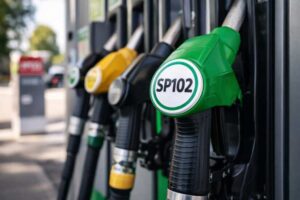
SP102: The complete guide to understanding this high-performance fuel

SP102 is a high performance fuel Designed to optimize the power and efficiency of modern engines, it incorporates specific additives that improve combustion and protect mechanical components. In a context where vehicle performance and longevity are crucial, understanding the characteristics of SP102 is essential.
Introduced by certain oil companies to meet the demands of engine manufacturers and discerning drivers, the SP102 It stands out thanks to its unique formulation. More stable and with a higher antioxidant content than standard fuels, it aims to reduce injector fouling and limit internal corrosion. This fuel, often certified by independent laboratories, meets the strictest European standards and is part of a responsible performance approach. In this article, we detail its origin, performance, uses, impacts, and selection criteria for motorists and fleet managers.
What is SP102?
THE SP102 is a new generation fuel, classified in the category of high performance fuelsIt is characterized by an optimized content of cleaning, antioxidant and anti-corrosion additives. Its main objective is to guarantee more complete and cleaner combustion, while preserving the fuel system and the engine.
Origin and history of the SP102
The development of SP102 It dates back to the early 2010s, when car manufacturers began demanding “cleaner” fuels to meet Euro 5 and Euro 6 emissions standards. Petroleum research laboratories then focused on formulations enriched with detergents and anti-wear agents. The designation “SP102” emerged as a symbol of enhanced performance: “SP” for Super Performance, “102” for the version number validated by a consortium of engineers.
Over the years, the SP102 has evolved to incorporate biodegradable components and patented organometallic compounds, designed to stabilize the fuel and limit deposit formation. Several independent tests, conducted by organizations such as the ICBT (International Centre for Biofuel Testing), have validated its antioxidant and cleaning qualities, which are superior to conventional fuels. Today, the SP102 is among the preferred references for sports pilots and fleet managers concerned with reliability and durability.
Composition and technical properties
The formula of SP102 relies on a precise assembly of components:
- High octane base fuels (RON ≥ 102) for better knock resistance.
- Detergent additives (polyisobutylene amines) to keep injectors and valves clean.
- Anti-corrosion agents (phosphoric esters) that protect metallic circuits.
- Oxidation inhibitors (phenolic antioxidants) to prolong fuel stability.
- Softening compounds to improve fluidity at low temperatures.
Thanks to this combination, the SP102 presents:
- More even combustion and fewer carbon deposits.
- A reduction in the content of fine particles and pollutants (CO, NOx).
- Improved protection against internal corrosion, particularly in direct injection engines.
- Improved fluidity for easier cold starts.
These characteristics make the SP102 a fuel particularly suited to supercharged engines, direct injection engines and sports vehicles, while remaining compatible with most modern vehicles equipped with catalytic converters.
The technical advantages and performance of the SP102
THE SP102 It is distinguished by a series of technical features designed to improve the vehicle’s overall performance:
- Octane rating optimization : with a minimum RON of 102, the fuel supports high compression without knocking, promoting superior engine performance and more responsive acceleration.
- Cleaning of injection components : the presence of detergent additives limits the fouling of the injectors, guaranteeing a finer and more homogeneous spray.
- Reduction of emissions : more complete combustion leads to a reduction in emissions of CO, unburned hydrocarbons and fine particles.
- Long-term protection : anti-corrosion and antioxidant agents protect power supply circuits and extend the lifespan of components.
- Better fluidity : the fuel remains effective in winter conditions, reducing the risk of freezing and facilitating starting.
In real-world conditions, several studies conducted on test benches have highlighted:
- A power gain of up to 3% compared to standard fuel without additives.
- Fuel savings of up to 2% thanks to more efficient combustion.
- A reduction in predictive maintenance, including less valve decarbonizing and fewer premature filter changes.
Anecdote: During an endurance race in Germany, a team of amateur drivers chose to switch entirely to SP102 After three hours of racing to preserve the injectors, they noted better linearity of acceleration and a “smoother” engine, with no loss of performance until the checkered flag.
These observations confirm that the SP102 is particularly suited to intensive use, whether for sporty driving, heavy transport or company fleets subject to strict time constraints.
Compatibility and use of the SP102
Before adopting the SP102It is essential to check compatibility with the engine and injection system. Although most modern vehicles support this fuel, some older or very specific models may have incompatibilities.
Compatible vehicles and engines
The compatibility of SP102 covers:
- Direct injection petrol engines (TSI, GDI, HPI, etc.).
- Turbocharged engines, where a high octane rating is crucial to prevent knocking.
- Sports and racing vehicles, often tuned to run on high-octane fuel.
- Fleets of commercial vehicles (LCVs) post-2010, equipped with compatible catalytic converters and pollution control systems.
On the other hand, it is advisable to avoid the SP102 on :
- Vehicles manufactured before the year 2000, whose seals and components are not designed for powerful additives.
- Severely deteriorated or unmaintained engines, which could react adversely to the cleaning properties of the fuel.
- Some petrol-electric hybrid vehicles, where the manufacturer’s specifications recommend the exclusive use of standard fuel without additional additives.
Usage and maintenance tips
To take full advantage of the SP102Adopt the following best practices:
- Fill the tank completely to maximize the effect of the cleaning additives.
- Plan to change the fuel filter every 30,000 km when switching to SP102, in order to remove any loosened deposits.
- Maintain regular maintenance (spark plugs, injectors, air filter) to ensure fuel efficiency.
- Alternate with a standard fuel from time to time if your vehicle is not explicitly recommended by the manufacturer for continuous use of SP102.
By following these recommendations, the benefits of SP102 This translates into increased accelerator responsiveness, reduced knocking, and fewer maintenance operations.
Environmental and economic impacts
Beyond performance, the SP102 This is part of an approach to reducing polluting emissions and optimizing costs. Its use has a positive impact on numerous parameters:
- Reduction in CO2 and unburned hydrocarbon emissions thanks to more complete combustion.
- Reduction of fine particles at the exhaust outlet, contributing to urban air quality.
- Extended maintenance intervals, therefore a reduction in waste related to used filters and spark plugs.
- Consumption optimization, with a saving of 1 to 2% on a full tank, reflected in the annual fuel budget.
From a financial perspective, the price difference at the pump between regular gasoline and SP102 is generally 5 to 10 cents per liter. At first glance, this may seem like an extra cost. However:
- Reducing workshop downtime and parts replacements results in overall savings of up to 15% on maintenance costs.
- Even a minimal gain in fuel consumption translates into significant annual savings for large fleets.
- For individuals, driving comfort and peace of mind in the face of increased engine longevity constitute a qualitative advantage.
Environmental concerns are also central to the discussion. By limiting polluting emissions and optimizing combustion, the SP102 contributes to a more virtuous cycle, especially when combined with hybrid or biofuel engines.
“Technical progress in fuels must not come at the expense of the environment. Performance and ecology can go hand in hand.”
— Dr. Marie Dubois, expert in fuels and renewable energies
Conclusion
THE SP102 represents a true technological leap in the world of high performance fuelsWith a high octane rating and cleaning, antioxidant, and anti-corrosion additives, it offers a rare balance between performance, durability, and environmental responsibility. Ideal for modern, turbocharged, and racing engines, it delivers tangible gains in power, fuel economy, and reduced emissions.
Before adopting it, check its compatibility with your vehicle and follow best maintenance practices to maximize its benefits. In the long run, the extra cost at the pump is more than offset by reduced maintenance costs and optimized fuel consumption.
Opt for the SP102It means choosing a more efficient, cleaner and more serene driving experience, both for everyday use and for the most demanding applications.
FAQs
1. Is SP102 compatible with my standard petrol engine?
In general, yes, for all petrol engines manufactured after 2000. However, check the manufacturer’s advice before use.
2. What is the price difference between standard fuel and SP102?
Expect to pay between 5 and 10 cents more per litre, depending on the station and location.
3. Does SP102 reduce fuel consumption?
Yes, more complete combustion can generate savings of 1 to 2% on fuel consumption.
4. Do I need to change my filters more often with the SP102?
It is recommended to schedule a fuel filter check/oil change every 30,000 km to remove any dislodged residue.
5. What are the main additives present in SP102?
Detergents, antioxidants, anti-corrosion agents and compounds to improve fluidity at low temperatures.
6. Can SP102 and standard fuel be alternated?
Yes, especially if your vehicle is not explicitly certified for continuous use of SP102. This helps to conserve the additives.
7. Is SP102 suitable for hybrid vehicles?
Only if the manufacturer allows it. Some hybrids require fuel without specific additives.
8. What performance gains can be expected with the SP102?
Up to 3% more power and improved acceleration responsiveness.
9. Is SP102 a “green” fuel?
It incorporates biodegradable components and helps reduce polluting emissions, but remains a fossil product.

Related Posts